The Numbers and Who Counts Them
From the Fastest-Growing Category to a Write-Down in Four Years
Photo: Robert Nagy / Pexels
Hard seltzer went from negligible to dominant to a balance-sheet problem faster than any volume category in recent US beer history.
The Ascent Was Genuine
White Claw launched in 2016, but the category barely registered until 2019, when hard seltzer shipments roughly tripled year-over-year and retailers began dedicating refrigerator doors to a product that had not existed as a meaningful SKU four years earlier. The Brewers Association was reporting hard seltzer as one of the most significant volume events in the beer industry's modern era, and Nielsen scanner data for 2019 showed the category generating more than $1 billion in off-premise retail sales in the United States — a benchmark that most craft styles took a decade to approach.
The structural story behind the surge was straightforward. Hard seltzer carried lower calories than most beer, fit the canned-convenience trend that was already reshaping packaging, and carried a health-adjacent positioning that required no formal health claim to land. It was also brewed or fermented at scale by some of the same producers who made beer, which meant existing TTB licensing and distributor relationships could carry it into market without new infrastructure. Mark Anthony Brands, maker of White Claw, and Boston Beer Company, which had launched Truly Hard Seltzer in 2016, were the two dominant players by 2019 and were both reporting volume growth that outpaced anything else in their portfolios.
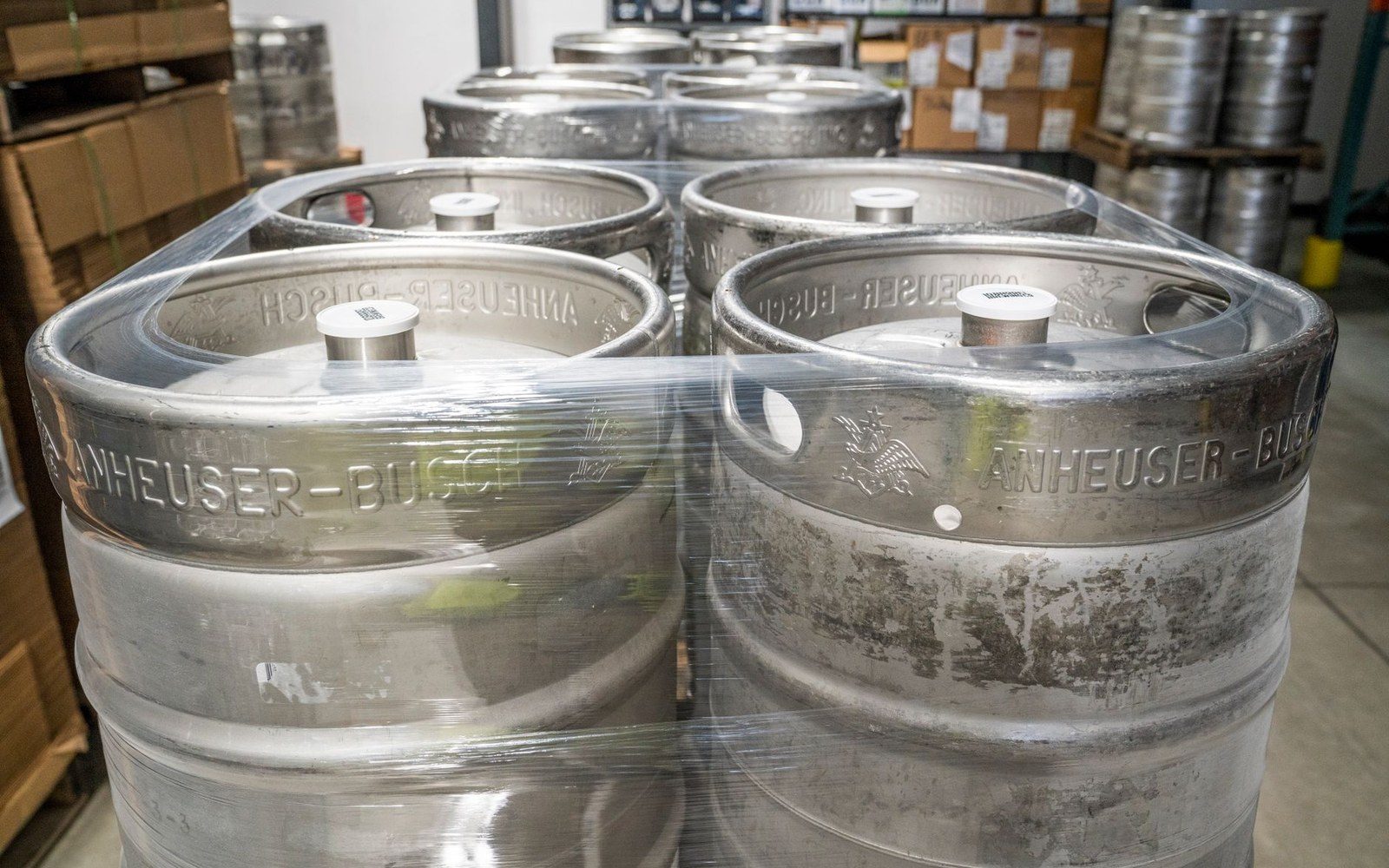
Kegs move without a distributor; cases do not. That difference is most of the argument for the taproom model.
Photo: ELEVATE / Pexels— but harder and faster. Boston Beer reported that Truly grew more than 140 percent in fiscal year 2020. White Claw, privately held, was widely estimated by trade observers and Nielsen-sourced reporting to hold approximately half the category on its own. The Brewers Association's year-end figures for 2020 placed hard seltzer at roughly 10 percent of total US beer industry volume, a share that had been effectively zero five years earlier. That single data point — a category going from trace to a tenth of a national market in half a decade — is the number against which everything that followed has to be measured.
The Forecast Error That Became a Write-Down
The problem with a trajectory that steep is that it tempts everyone in the supply chain to plan as though the slope continues. Boston Beer said publicly, in its 2020 communications to investors, that it expected Truly to keep growing at rates comparable to the prior year. The company contracted for ingredients and packaging in volumes consistent with that forecast. So did others. By mid-2021, every major beer producer with seltzer capacity had expanded: Molson Coors with Vizzy and Coors Seltzer, Constellation Brands with Corona Hard Seltzer, Anheuser-Busch InBev with Bud Light Seltzer. The shelf went from two or three dominant brands to dozens.
Chronology
- 2016White Claw and Truly Hard Seltzer both launch
- 2019Category roughly triples year-over-year; crosses $1 billion in off-premise retail sales (Nielsen)
- 2020Truly grows more than 140% (Boston Beer fiscal report); hard seltzer reaches approximately 10% of total US beer volume (Brewers Association)
- Mid-2021Circana/Nielsen data shows category growth rate decelerating sharply
- July 2021Boston Beer announces Truly inventory write-down; stock falls more than 25% in one day; full-year write-down exceeds $60 million
- 2022Hard seltzer volume declines year-over-year for the first time (Brewers Association); SKU rationalization across major producers
- 2022–23Promotional pricing widespread; distributor margin erosion; category share contracts from 2020 peak
Category growth, meanwhile, had begun to flatten. Circana (then still operating under its earlier trade name IRI) and Nielsen data released through 2021 showed year-over-year growth rates decelerating sharply through the second and third quarters. By the end of 2021, off-premise scanner data suggested the category had grown only modestly in volume — a number that, against the supply that had been built, meant inventory was piling up at distributors.
The reckoning was public and specific. In July 2021, Boston Beer Company reported a write-down of excess Truly inventory and revised its full-year earnings guidance dramatically downward. The company's stock fell more than 25 percent in a single day following that announcement. The write-down was not a rounding error: Boston Beer ultimately recorded a charge in excess of $60 million against Truly-related inventory and contract commitments in fiscal year 2021. Jim Koch, the company's founder, described the forecasting failure as a significant operational miscalculation. The Brewers Association's tracking data through that period confirmed the macro picture — hard seltzer volume declined in 2022 for the first time as a category, a reversal that moved the needle on total beer industry volume figures.
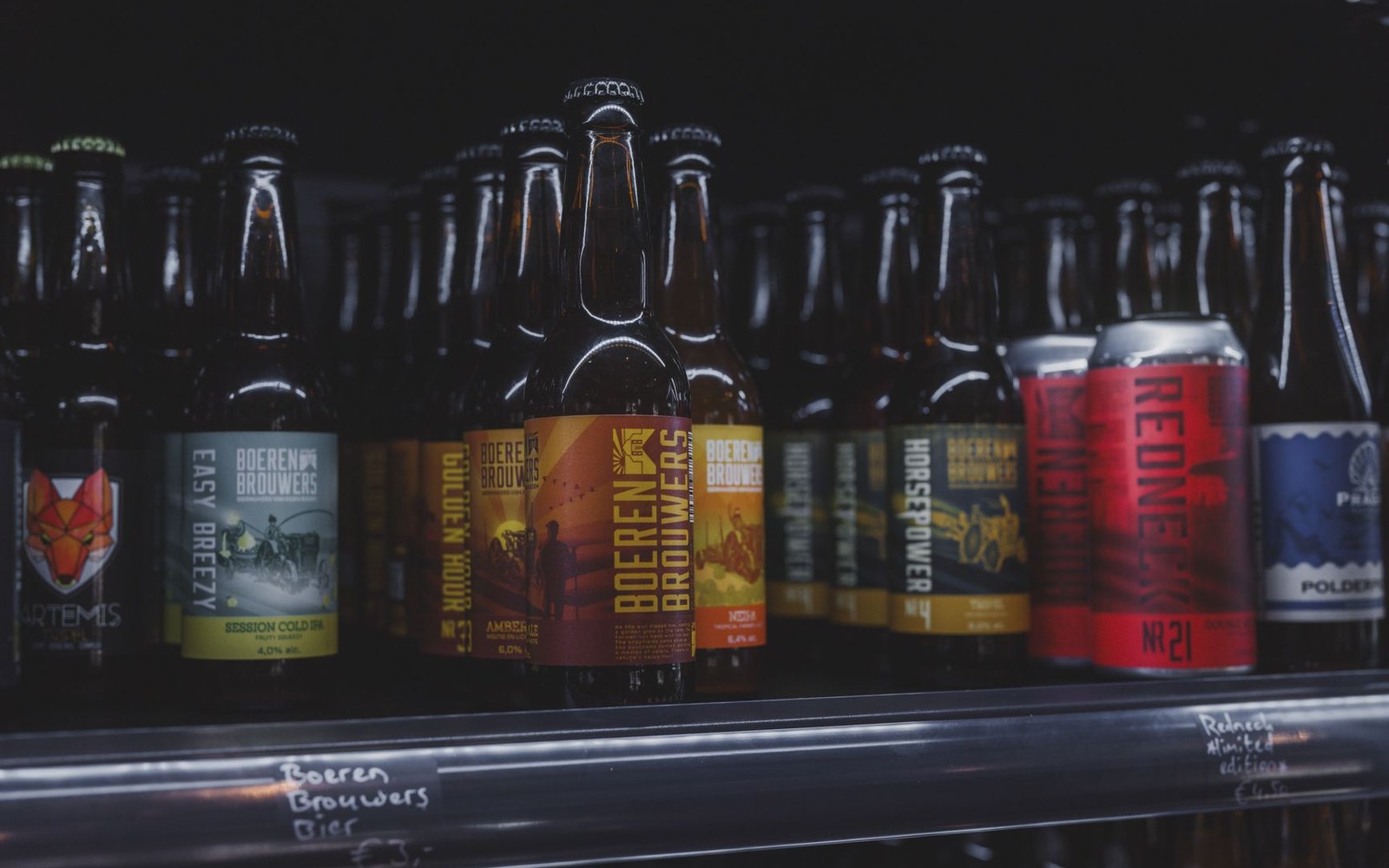
Shelf position, not marketing, is the measure of a category that has arrived.
Photo: Haberdoedas Photography / PexelsWhat Contraction Actually Looks Like in the Data
By 2022 and into 2023, the pattern across producers was consistent: SKU rationalization, reduced marketing spend, and — for smaller and regional brands — quiet discontinuation. Molson Coors folded several of its seltzer sub-brands. AB InBev redirected promotional resources from Bud Light Seltzer toward other products. Boston Beer repositioned Truly with reformulations and new variety packs in an attempt to stabilize volume, but the Brewers Association's figures for 2022 showed hard seltzer's share of total US beer volume contracting from its 2020 peak.
The distributor tier bore particular friction. Under the three-tier system, distributors had warehoused inventory ordered against 2021 forecasts that never materialized. Aged seltzer — a category with a freshness perception problem among consumers who had grown accustomed to new releases and new flavors — was difficult to move at full price. Some distributors reported absorbing margin losses to clear stock rather than return it, because return rights in the beer distribution system are limited by state law and vary significantly by market.
The Numbers and Who Counts Them
The pricing story is equally telling. Hard seltzer had launched at a premium to light beer — the category's price-per-barrel was substantially above standard domestic lager — and early entrants maintained that premium through 2020. By 2022, promotional pricing was widespread, with multi-pack prices discounted to levels that eroded the premium positioning that had been part of the category's financial logic from the outset.
The Market-Cycle Reading
What hard seltzer traced, cleanly and quickly enough to study as a single arc, is the standard demand-forecasting failure pattern: a genuine consumption shift, a supply-side response calibrated to an extrapolated slope rather than a new level, and a correction that falls hardest on whoever built inventory most aggressively. Boston Beer's write-down was the most visible, but every producer who entered the category between 2019 and 2021 underperformed its own projections by 2022.
The Brewers Association's data places hard seltzer's peak at somewhere around 2020–2021 and shows consistent volume decline since. The category has not disappeared — White Claw and Truly remain meaningful volume brands — but it is no longer a growth engine. What replaced it on the growth side of the ledger is a different story: no- and low-alcohol beer has been the one consistent volume gainer across the early 2020s, growing from a fraction of the base that seltzer once occupied but doing so without the vertical trajectory that produces inventory crises.
The seltzer cycle's particular value for anyone reading beer industry data is its compression. Most market cycles in beverage alcohol take a decade to complete; this one ran from negligible to dominant to write-down in roughly four years, generating clean, dated, company-level figures at each stage. That makes it close to a controlled case study in what happens when a beer industry supply chain forecasts a trend line rather than a level.