The Breweries Themselves
Dogfish Head Inside Boston Beer, Five Years On
Photo: Dogfish Head Brewery, Milton, Delaware · Wikimedia Commons
A merger framed as a union of equals produced one set of financials. Boston Beer's annual reports show what happened next.
The Deal in Brief
When Boston Beer Company and Dogfish Head completed their merger in July 2019, Sam Calagione described it as a "merger of equals" — a phrase chosen carefully, because Dogfish Head was by any volume measure the smaller party. Boston Beer had shipped roughly 4.1 million barrels in 2018 according to Brewers Association data; Dogfish Head, founded in Rehoboth Beach, Delaware (and later centred on Milton, Delaware), had crested somewhere near 230,000 barrels at its 2016 peak before sliding back. The all-stock deal valued Dogfish Head at approximately $300 million at close, giving Calagione and co-founder Mariah Calagione combined ownership of roughly 5.5 percent of Boston Beer's outstanding shares.
The strategic logic was articulated clearly in Boston Beer's SEC filings: Dogfish Head brought a premium off-premise position, a high-margin spirits line, and an enotourism infrastructure — the Milton brewery, the Rehoboth Beach brewpub, the Dogfish Inn — that Boston Beer's balance sheet could sustain through margin compression the independent company would have struggled to absorb alone.
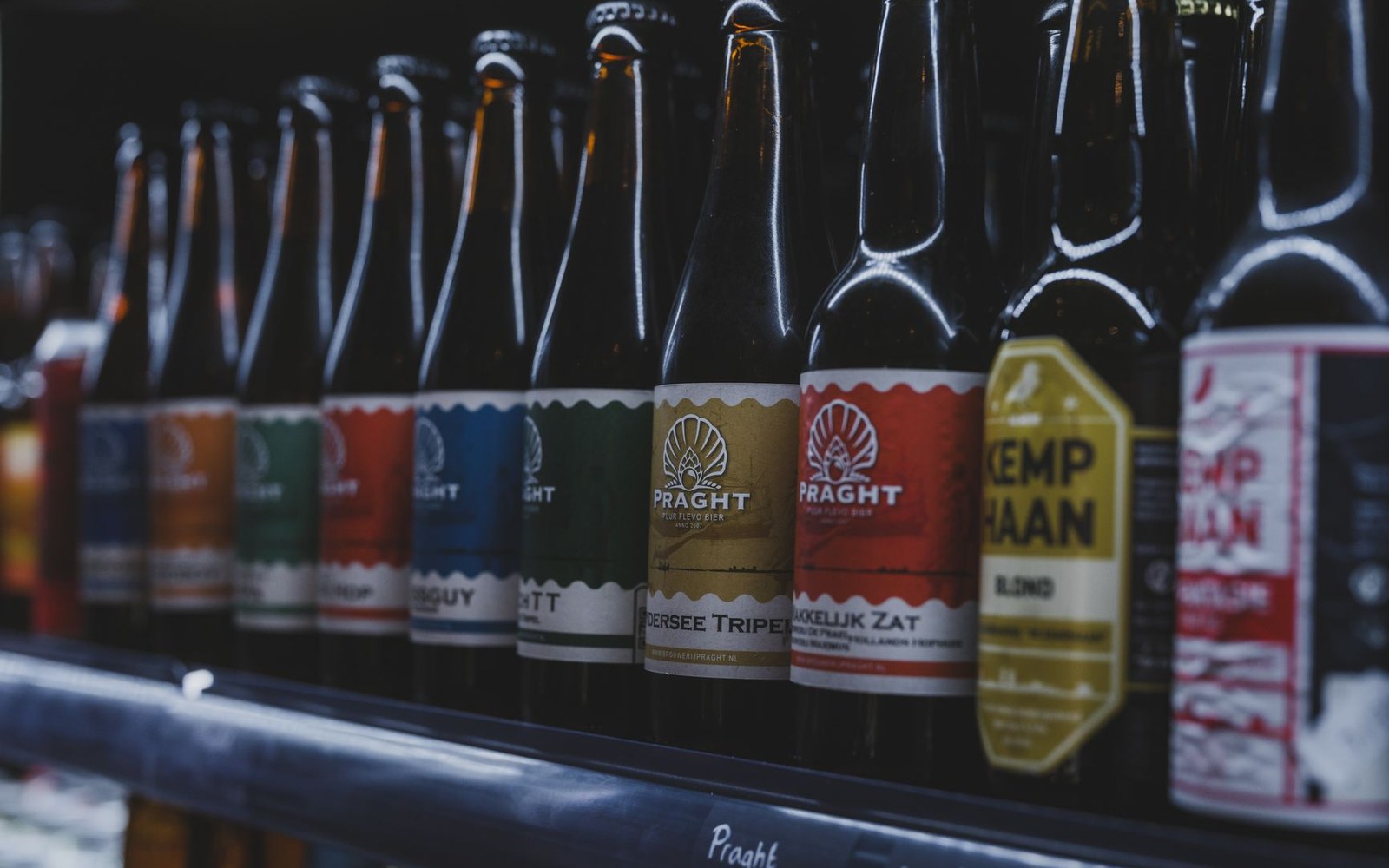
Shelf space is finite and re-set seasonally, which is why a category that stops growing loses facings quickly.
Photo: Haberdoedas Photography / PexelsWhat the Financials Show
Boston Beer's annual reports are the most granular public window into the combined entity. The 2019 10-K, which captured only a partial year of the merged operation, showed consolidated depletions — the industry's measure of shipments through to retail — rising 17 percent year-on-year, driven partly by Truly Hard Seltzer rather than either flagship beer brand. That dynamic is telling: hard seltzer's rapid growth through 2020 and subsequent write-downs defined Boston Beer's financial story in the immediate post-merger years far more than the integration of Dogfish Head.
By 2021, Boston Beer's 10-K reported a $107 million goodwill and impairment charge related to its non-alcoholic and hard-seltzer investments — a write-down that was a substantial fraction of the acquisition cost of Dogfish Head and illustrated the volatility the deal's timing had placed the combined company inside. Dogfish Head itself did not appear as a discrete segment in the filing; Boston Beer does not report brand-level volumes or revenues separately, so the contribution of Dogfish Head to the top line must be inferred rather than read directly.
Key figures and dates
What can be read: gross margin across the combined business. That figure deteriorated from roughly 53 percent in 2018 to 40 percent by 2021, according to Boston Beer's SEC filings, before recovering partially as the company restructured capacity. The margin compression reflected supply-chain costs, excess seltzer inventory and ingredient inflation rather than anything specific to Dogfish Head — but it meant the portfolio's premium craft positioning could not offset those pressures at scale.
Consolidation's Structural Logic
Dogfish Head's trajectory inside Boston Beer illustrates a pattern the Brewers Association's annual production data has traced across multiple craft acquisitions: brands that grew under scarcity and direct-to-consumer enthusiasm often plateau or contract once three-tier distribution absorbs them fully. The Brewers Association reported that the overall craft segment's volume share held near 13 percent of the US market through 2023, while dollar share ran higher — a gap explained largely by the price-per-barrel premium that brands like Dogfish Head helped establish.
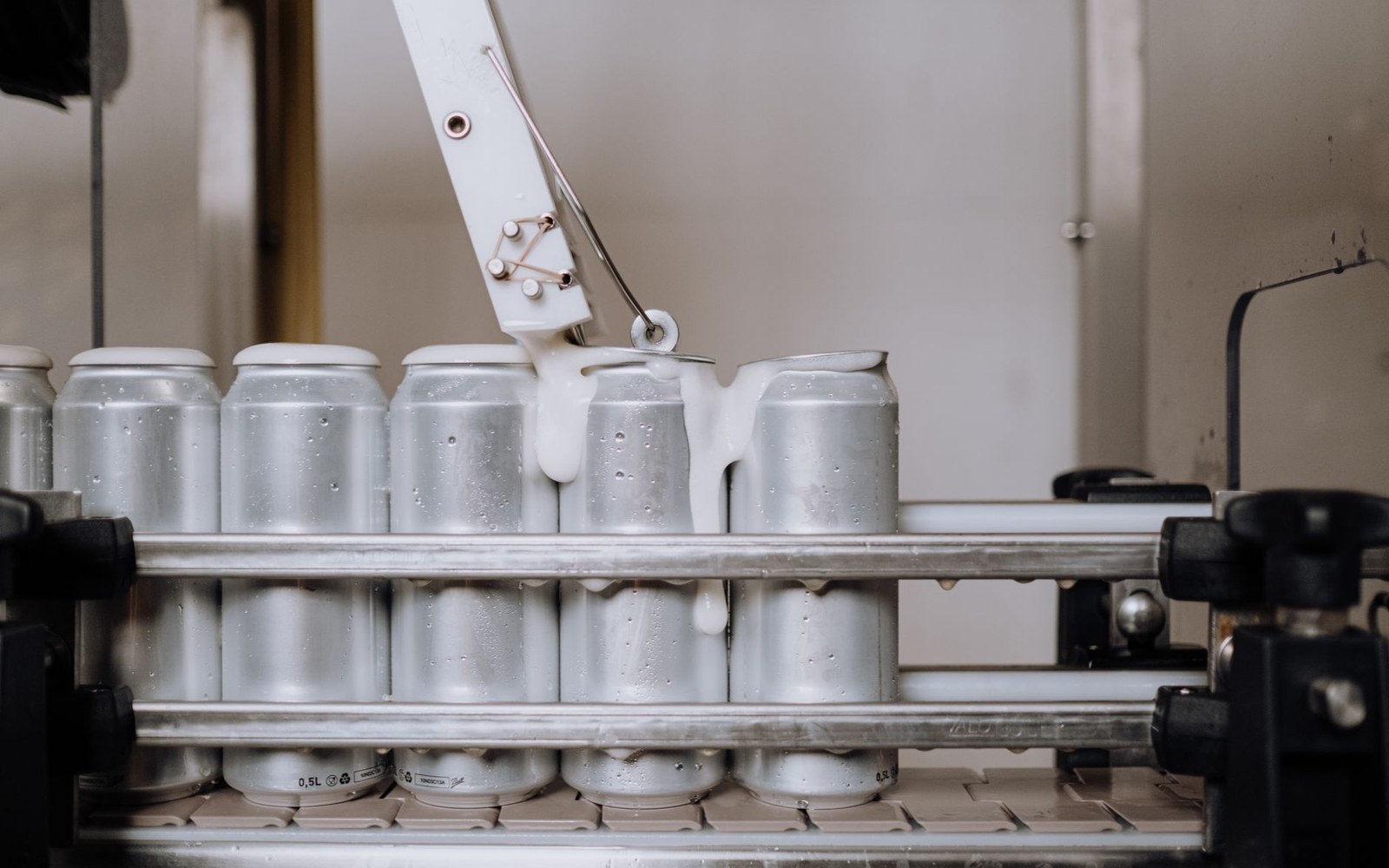
A canning line at speed: the format that let small breweries reach a shelf without a bottling hall.
Photo: cottonbro studio / PexelsSam Calagione stepped back from day-to-day operations in 2022, remaining on Boston Beer's board. The company's 2023 annual report indicated a continued focus on the Truly and Samuel Adams core franchises, with the Dogfish Head brand repositioned within a streamlined portfolio. Boston Beer's total depletions fell approximately 8 percent in 2023 versus 2022, a decline the company attributed to hard seltzer contraction and broader above-premium beer softness.
Five years on, the merger reads less like a union of equals than a well-timed acquisition of a brand whose independence was becoming expensive. Dogfish Head's innovation legacy and premium equity survived the integration; its separate financial identity did not. In that, it resembles most craft consolidation: the name stays on the can, and the balance sheet belongs to someone else.