The Breweries Themselves
Cantillon Produces About 2,000 Hectolitres a Year, and That Is the Whole Problem
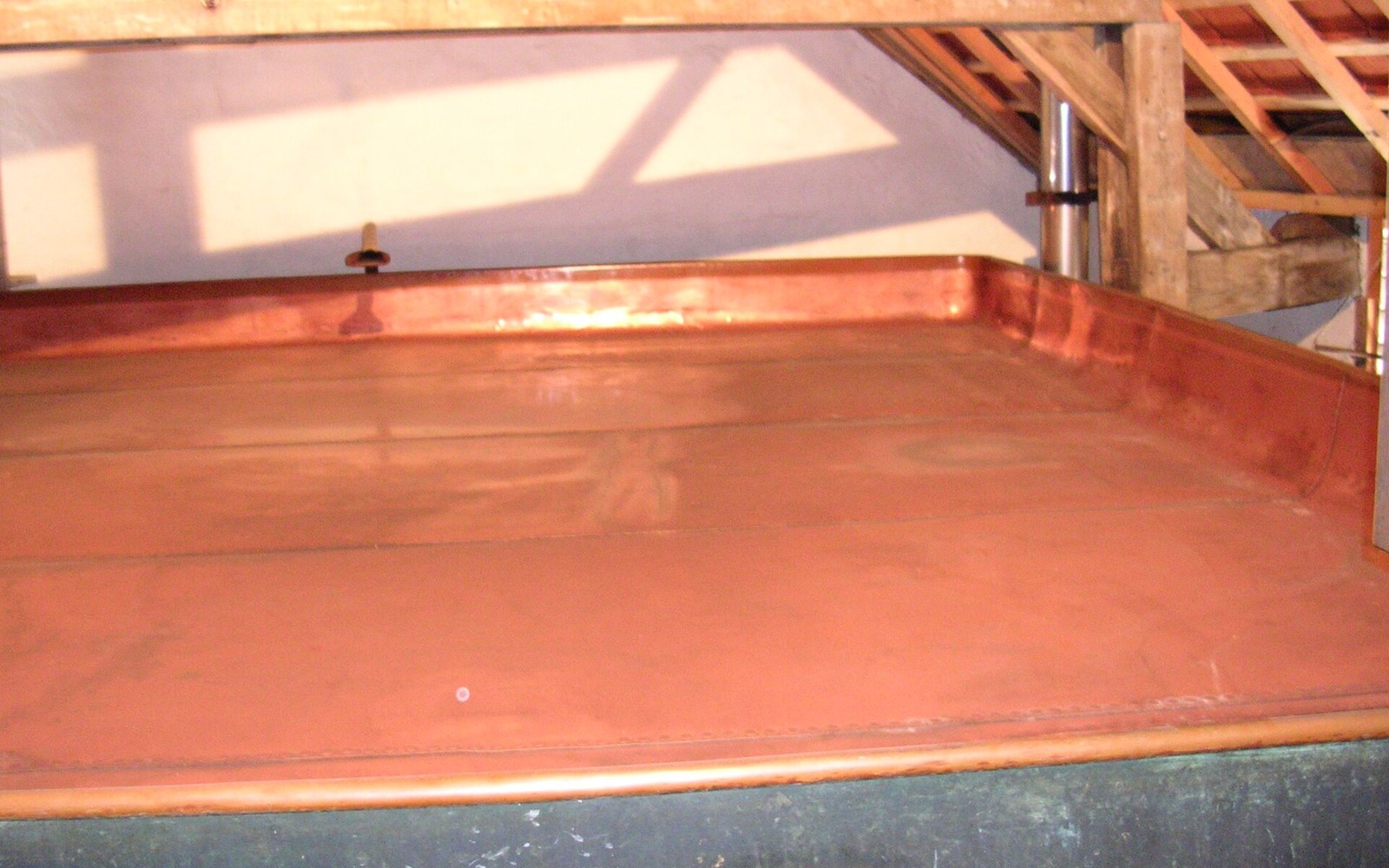
Photo: Cantillon Brewery - Offenes Kühlschiff · Wikimedia Commons
Two Belgian lambic breweries between them fill less volume in a year than a mid-size American craft operation ships in a week — and that gap explains everything about how their bottles are priced, traded and rationed.
The Output Is Simply Very Small
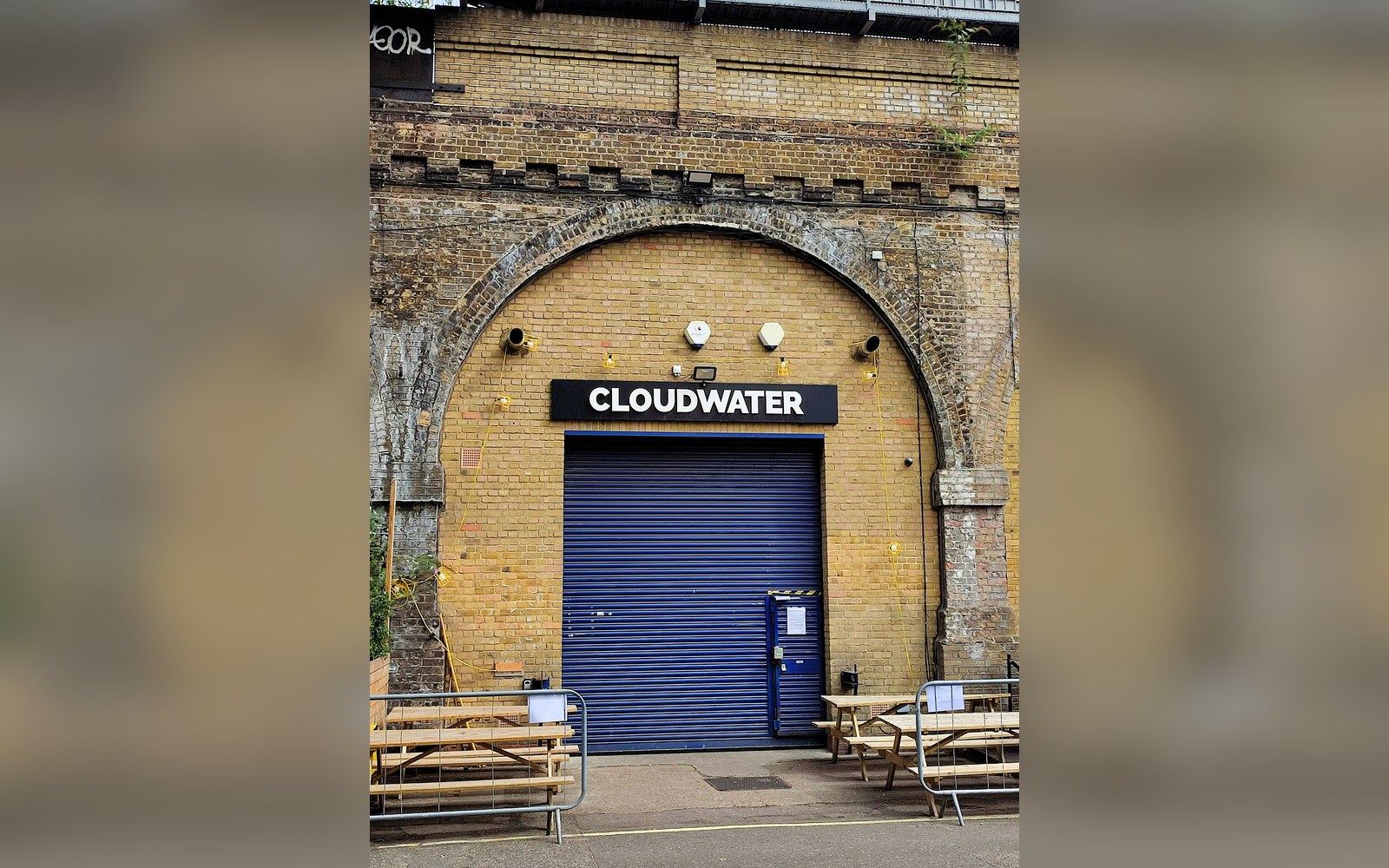
Cantillon Brewery, operating from its Sint-Gillis facility in Brussels, produces roughly 2,000 hectolitres annually — approximately 1,700 US barrels. The figure is not a strategic choice so much as a structural one: lambic fermentation depends on spontaneous inoculation by wild yeast and bacteria drawn from the local air, a process that cannot be meaningfully accelerated without compromising the product. Fermentation runs across a single winter season, from October through April, when ambient temperatures are low enough to prevent contamination. The brewery's coolship — a shallow, open copper vessel — limits batch size, and the aging programme in oak barrels further constrains throughput. Cantillon has never announced plans to expand production in any material sense.
3 Fonteinen, the Beersel-based producer run by Armand Debelder and subsequently rebuilt after a catastrophic temperature malfunction destroyed nearly its entire barrel stock in 2009, operates at a similarly constrained scale. The brewery does not publish precise annual figures, but trade reporting and import allocation records consistently describe output in the low-hundreds-of-hectolitres range for its own-production lambic, supplemented by purchased wort blended to its specifications.
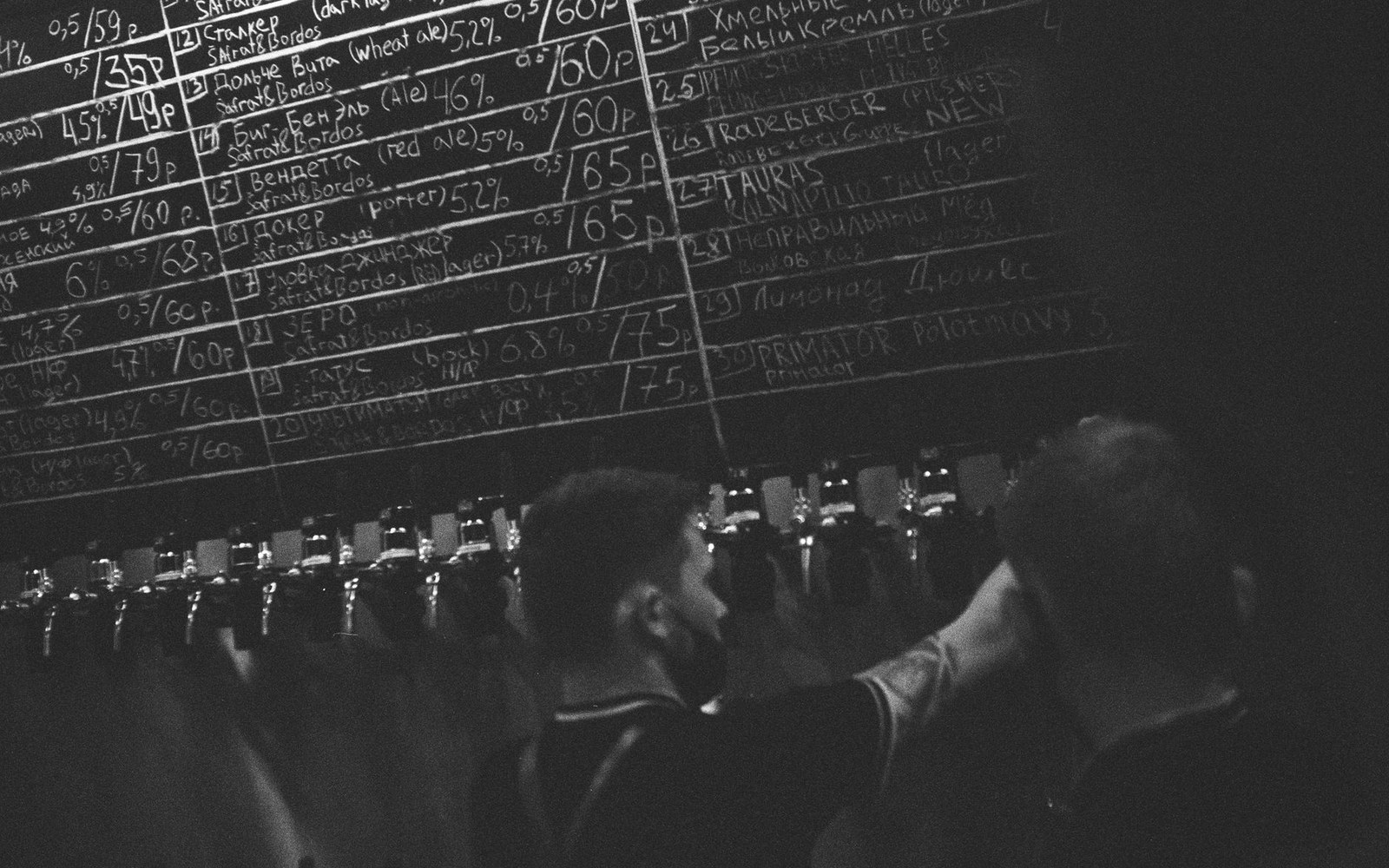
The board is the clearest read on style rotation there is — it changes months before the annual figures do.
Photo: Viktorya Sergeeva 🫂 / PexelsTogether, the two producers represent a combined volume that a single mid-size American regional craft brewery might ship in a week. The Brewers Association's published production thresholds define a regional craft brewery as one producing between 15,000 and six million barrels annually; Cantillon's 1,700 barrels places it well below even the smallest domestic craft producer of note.
Allocation as the Load-Bearing Structure
Because output is fixed and demand is global, both breweries have adopted allocation systems that function more like rationing than conventional distribution. Cantillon sells a significant share of its production direct from the brewery in Brussels, where visitors queue — sometimes for hours — during its periodic open-day events, known as Zwanze Day and the Fête des Vieux Lambics, to access bottles unavailable anywhere else. International distribution is handled through a small number of importers per market, each of whom receives a capped annual allotment. US importers operate under a strict per-account cap; a retailer receiving an allocation typically receives one or two cases of flagship blends such as Kriek, Fou' Foune or the annually-released Zwanze, and that quantity does not grow with demand.
Key production figures
3 Fonteinen's Armand&Gaston and Schaerbeekse Kriek face analogous constraints. The brewery uses a lottery system for certain limited releases, and its importer relationships mirror Cantillon's in their hard-capped structure. Both breweries have publicly resisted expanding their distribution footprints specifically to protect the integrity of existing allocations.
The consequence shows clearly in secondary-market data. Untappd's highest-rated beers list has consistently placed Cantillon and 3 Fonteinen expressions in its global top tiers, with user check-in data reflecting extreme geographic concentration — most check-ins logged against bottles purchased either at source in Belgium or through the small number of licensed US retailers holding allocations. The gap between list price and secondary-market transaction price for bottles such as Cantillon Lou Pepe or 3 Fonteinen Intens Rood routinely reaches multiples of retail, with grey-market trades documented in trade publications including Vinepair and Good Beer Hunting.
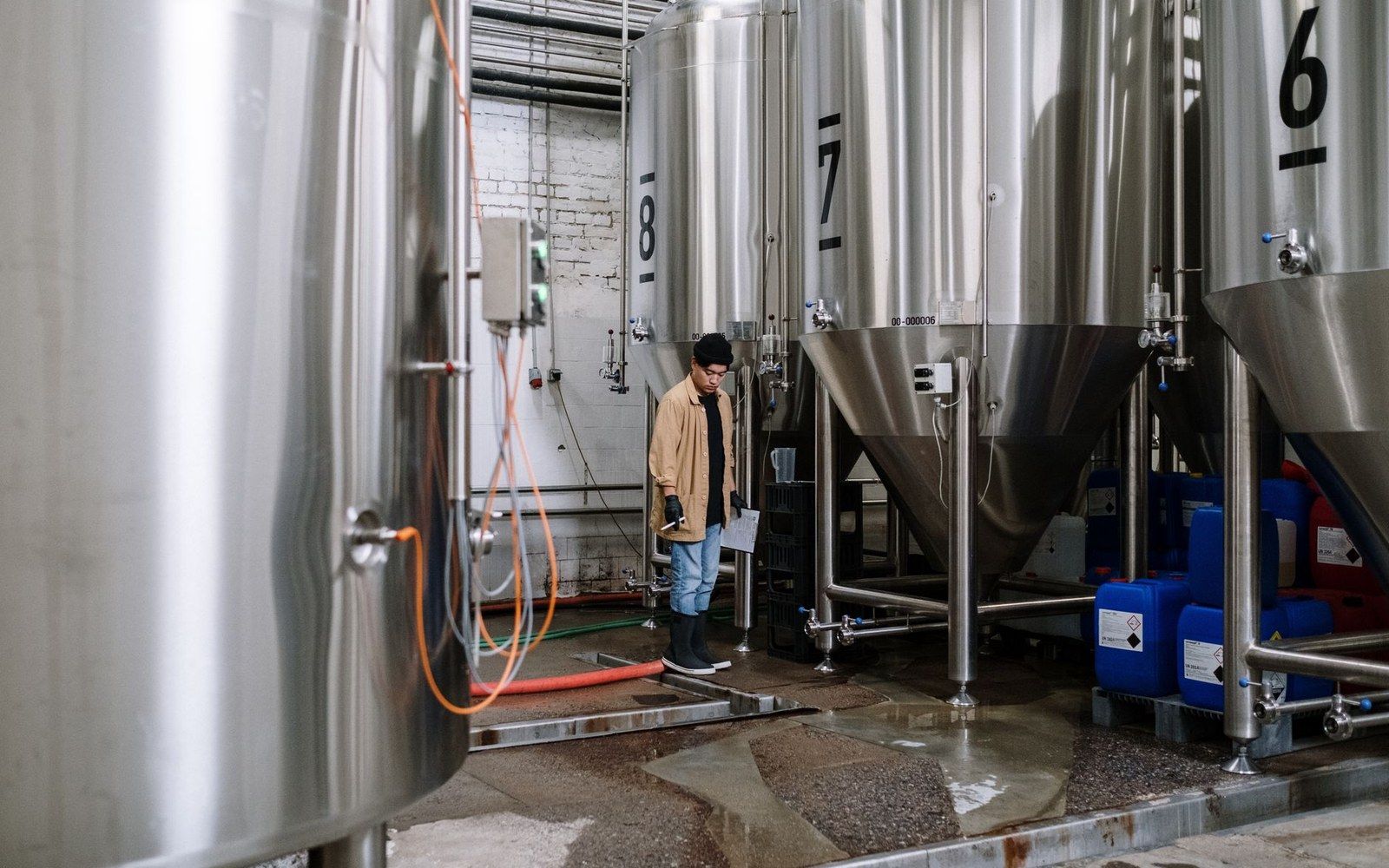
Fermenter capacity bought during the boom is the asset most closures leave behind.
Photo: cottonbro studio / PexelsWhat the Constraint Actually Signals
The supply problem at Cantillon and 3 Fonteinen is not a business failure — it is a legibility problem. The secondary market and the Untappd ratings data are both registering the same signal: that spontaneous-fermentation lambic production is geographically bounded in a way that no amount of capital can easily override. The Senne valley microclimate around Brussels, the specific wild yeast strains native to that corridor — principally Brettanomyces bruxellensis and the Pediococcus and Acetobacter species that define the flavour profile — do not travel. Replication elsewhere has been attempted; the results are categorically different products.
What the allocation systems at both breweries actually reveal is that price-per-barrel as a revenue metric, familiar from Brewers Association reporting on craft's dollar share, collapses when volume is this constrained. At 2,000 hectolitres, the question is not margin — it is which market, which importer and which customer receives anything at all.