The Breweries Themselves
Tree House and Trillium Built Something You Can Only Get There
Photo: Yury Gargay / Pexels
The economics of deliberate scarcity in Massachusetts
Two breweries in Massachusetts — Tree House Brewing in Charlton and Trillium Brewing in Canton — have built businesses whose defining feature is that the product is extremely difficult to get anywhere other than the source. That is not an accident of distribution strategy; it is the strategy. Both operate with minimal wholesale footprint, commanding taproom margins that would be unrecognisable to a conventional regional brewer, and both have sustained multi-hour queues for can releases that, in any other consumer category, would simply mean restocking the shelf. In craft beer, the queue is part of the proposition.
Understanding why requires starting with the three-tier system. Under US alcohol law, a brewer selling to a retailer must move the product through a licensed distributor, who takes a margin — typically in the range of 25 to 30 percent of the price — before the retailer takes another. A pint sold directly across a brewery taproom bypasses both of those tiers entirely, delivering something closer to full retail price back to the producer. For a brewery whose beer commands a premium, the arithmetic of self-distribution-via-taproom becomes overwhelmingly attractive. High-demand, low-distribution craft breweries can generate revenue per barrel that is several multiples of what a widely distributed regional earns on the same volume.
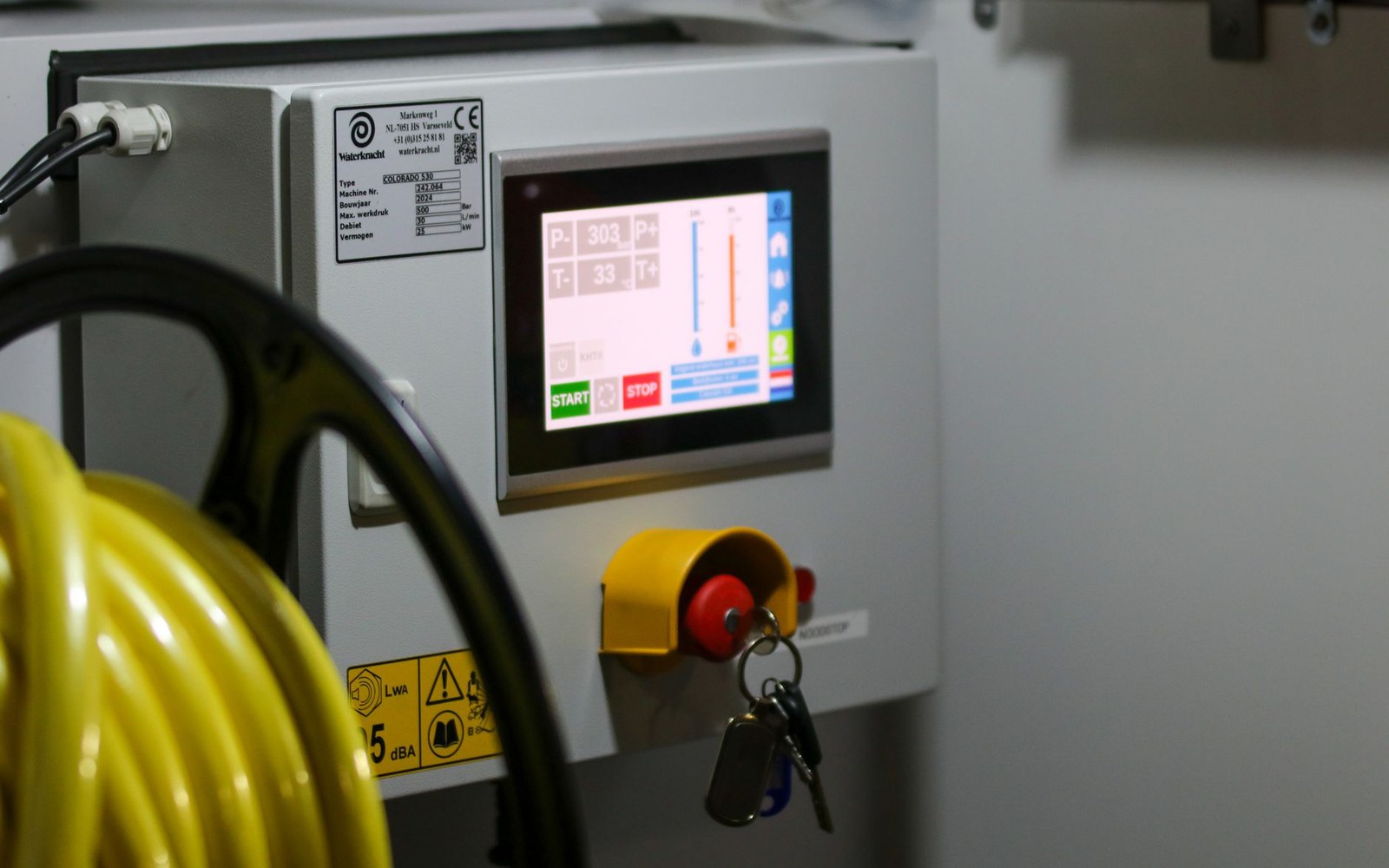
Batch monitoring is where the cost of a slower, colder fermentation shows up as tank time.
Photo: Freek Wolsink / PexelsProduction scale and the taproom model
Tree House, founded in 2011 and now headquartered at a large-scale facility in Charlton that opened in 2017, has expanded its physical footprint substantially while preserving the scarcity logic. The Charlton campus added a second building and an outdoor event space, and the brewery later opened taproom-only satellite locations including sites in Tewksbury and Sandwich, Massachusetts. What it has not done, to any meaningful extent, is open up wholesale distribution beyond its own counters. The Brewers Association's production tier definitions place breweries above 15,000 barrels per year in the regional category; Tree House has crossed that threshold in recent years while maintaining the model. That combination — regional-scale volume, taproom-primary revenue — is unusual enough to function as a case study on its own.
Trillium, co-founded by JC and Esther Tetreault and operational since 2013, pursued a similar path through multiple Boston-area taproom locations: the original Fort Point neighborhood address, the Congress Street address in South Boston, and the Canton production facility that anchors its current operation. Like Tree House, Trillium's beer reaches consumers almost entirely through its own retail points. Both breweries are classified by the Brewers Association as craft producers under the independence threshold of 25 percent or less large-brewer ownership — a status that signals not just scale but ownership structure.
The economic logic in numbers
The style both breweries are most associated with is the hazy IPA, a New England–origin format characterised by low bitterness, high late-hop and dry-hop aroma, and purposeful yeast and protein haze. In the assessment of the market-research firm Circana, hazy IPA is among the highest-velocity styles in the premium craft segment. It is also among the most technically demanding to do at the level that generates the kind of critical following both Tree House and Trillium have built: the hop compounds responsible for the aroma are volatile and degrade quickly, which means that freshness of product from point of production to point of consumption matters enormously. A model that keeps those two points as close together as possible — taproom, or nothing — solves a real technical problem while simultaneously creating an economic moat.
The queue as a market signal
Weekend can releases at Tree House's Charlton facility have, on documented occasions, drawn lines measured in hours before the doors open. That behaviour carries measurable information. It indicates that demand at the offered price exceeds supply and that buyers value the product highly enough to allocate significant time to acquiring it — a level of price-inelasticity that a conventional retailer would resolve by raising prices or expanding volume, or both. Tree House's response has been to expand capacity and locations while holding the distribution model fixed, effectively harvesting the premium without converting it to wholesale volume.
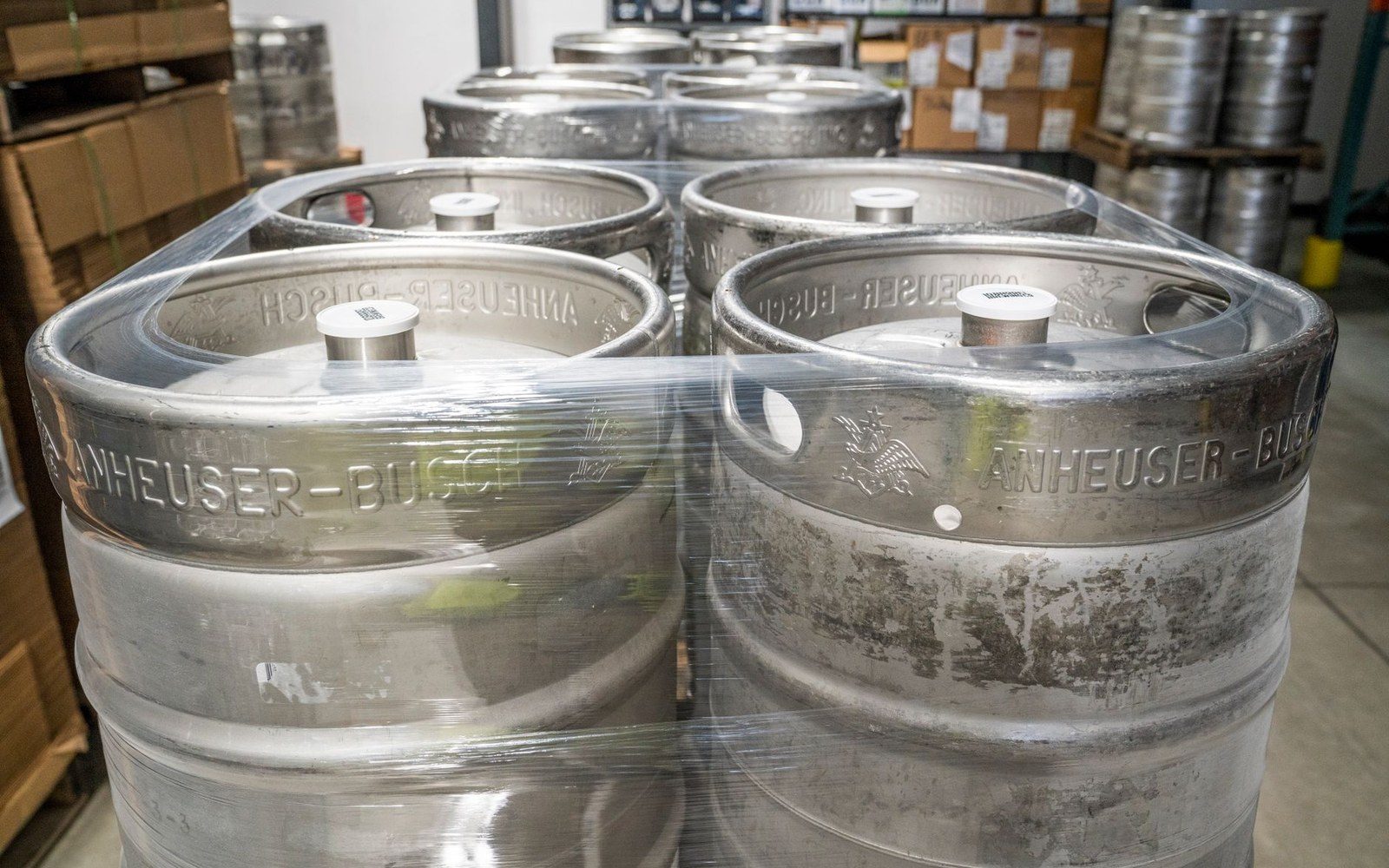
Cold storage is a fixed cost that does not fall when volume does.
Photo: ELEVATE / PexelsThere is an irony in the economics worth naming directly: the model works partly because the product is perceived as scarce, but the breweries are not small. Tree House, by any measure of annual barrel production that has been publicly discussed in trade reporting, is among the larger independent craft operations in New England. The scarcity is architectural, built into the distribution structure rather than the production ceiling. The consumer pays a premium for access; the brewery collects that premium without sharing it with the distribution tier. Both parties, evidently, consider the arrangement satisfactory.
What makes this fragile — and it is worth naming that too — is that the model depends on sustained consumer willingness to travel, queue and treat the brewery visit as an event. That willingness has held for Tree House and Trillium through a period when overall US craft beer volume has faced headwinds. The Brewers Association reported that total craft volume fell approximately 1 percent in 2023, even as brewery closure rates exceeded new openings for the first time in the modern era. Neither Tree House nor Trillium appears in the closure data. Their model's insulation from the pressures affecting distributed craft beer — on-premise competition from canned cocktails, shelf-space competition from hard seltzer, price sensitivity in grocery — is a direct function of bypassing the channels where those pressures bite hardest.
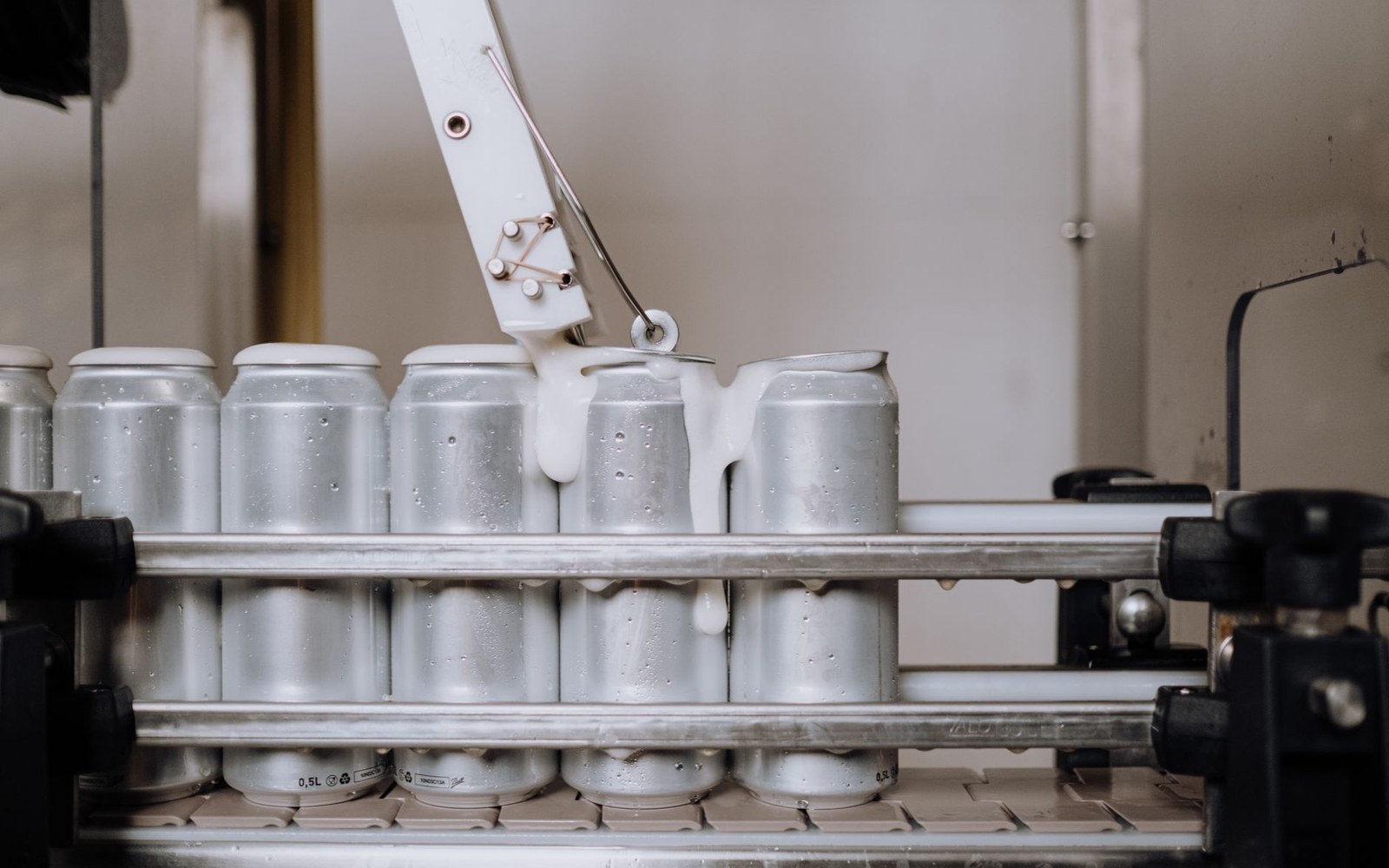
A canning line at speed: the format that let small breweries reach a shelf without a bottling hall.
Photo: cottonbro studio / PexelsThe satellite taproom expansions at both breweries represent an attempt to extend the model geographically while preserving its logic. Rather than distributing beer to new markets through the wholesale tier, the breweries bring the taproom to new markets. The product still only moves to consumers who present themselves at a Tree House or Trillium counter. The per-pint economics remain intact. The strategic bet is that the audience willing to do that is larger than a single location can serve, but not so large or so geographically dispersed that a wholesale network becomes necessary.
Whether this scales further — whether a tenth taproom location works as well as the second or third — is an open empirical question. What the current evidence shows is that the model has proven durable for two specific breweries, in a specific state, building on a specific style, at a specific moment in the market cycle. Massachusetts's relatively beer-friendly taproom regulations, passed through legislative updates in the 2010s that extended on-premise pouring rights and simplified direct-to-consumer sales, created the legal environment in which this architecture could function. The beer had to be excellent. The state's legal framework had to permit the model. Both conditions obtained, and two breweries built something — a sustained, high-margin, destination-taproom business — that the standard distribution economics of the American beer industry would not have permitted them to build any other way.