Where It Came From
Pilsner Urquell Brewed Its First Batch in 1842, and the Style Took the World
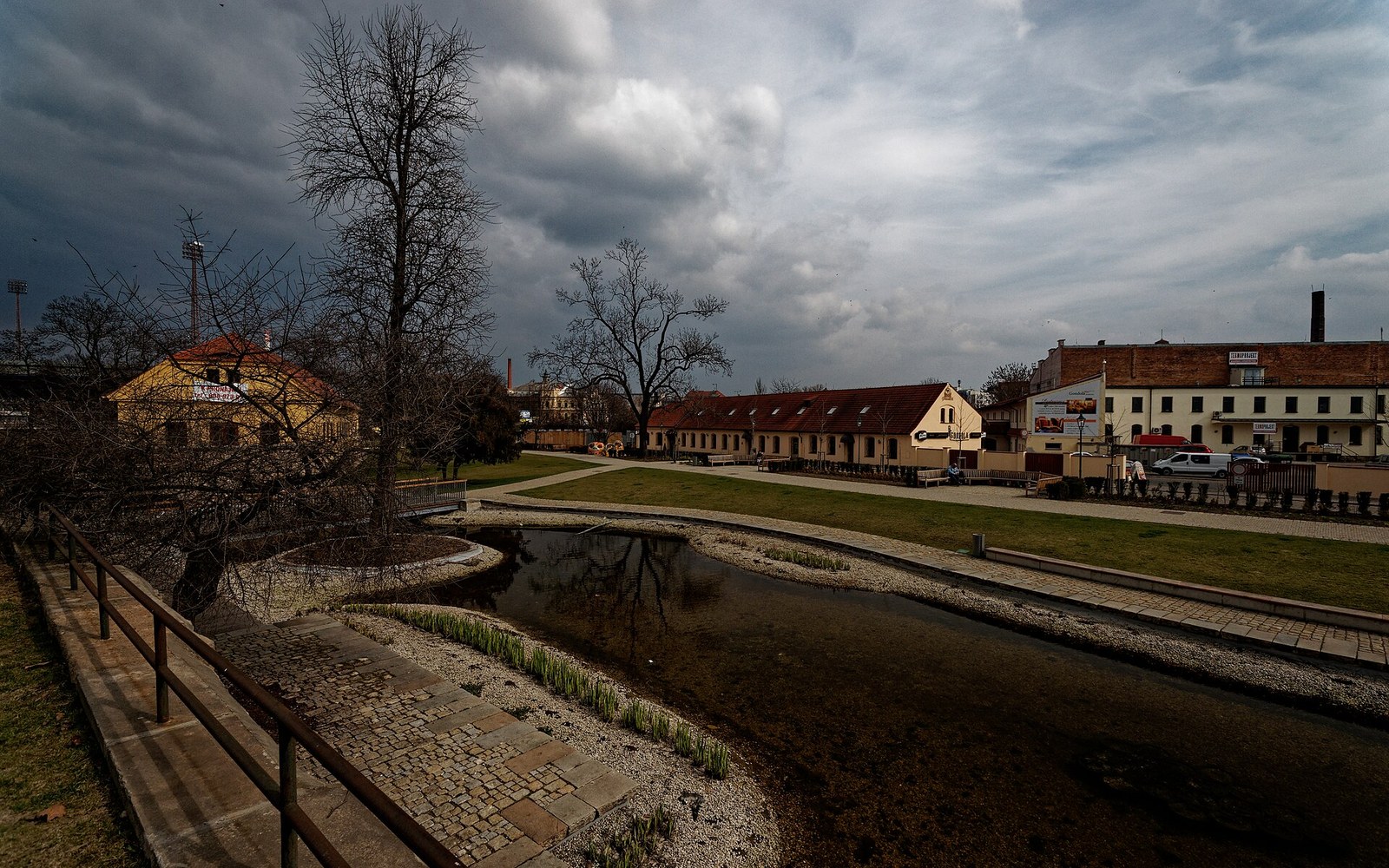
Photo: Plzeň - Sady 5. května - View East over Mlýnská strouha towards Plzeňský Prazdroj (Pilsner Urquell Brewery) · Wikimedia Commons
The pale lager produced in Plzeň on 5 October 1842 became the template for roughly two-thirds of all beer consumed on earth.
The Brew That Changed Everything
Plzeň's city council did not set out to invent a global style. They set out to stop an embarrassment. By 1838, the burghers had grown frustrated enough with inconsistent local brewing that they poured thirty-six barrels of bad beer into the gutter in front of the town hall. The response was a new civic brewery — the Měšťanský pivovar, later known as the Burger's Brewery — staffed with a Bavarian brewer named Josef Groll, who arrived with technical knowledge of bottom fermentation and left with a place in brewing history.
Groll's first batch, brewed on 5 October 1842 and served to the public that November, combined three inputs that did not exist in combination anywhere else. The water drawn from Plzeň's sandstone aquifer is among the softest in Central Europe — hardness measured consistently below 10 milligrams of calcium per litre — which suppressed the extraction of harsh tannins and let hop bitterness read as clean rather than astringent. The hops were Saaz (now more precisely Žatec, from the town to the north of Plzeň), whose noble-variety character runs low in cohumulone and high in aroma. And the yeast was a lager strain, fermenting cold at temperatures that produced a clear, stable beer with a pale straw colour that contemporaries described with genuine astonishment — most beer they knew was dark, hazy or both.
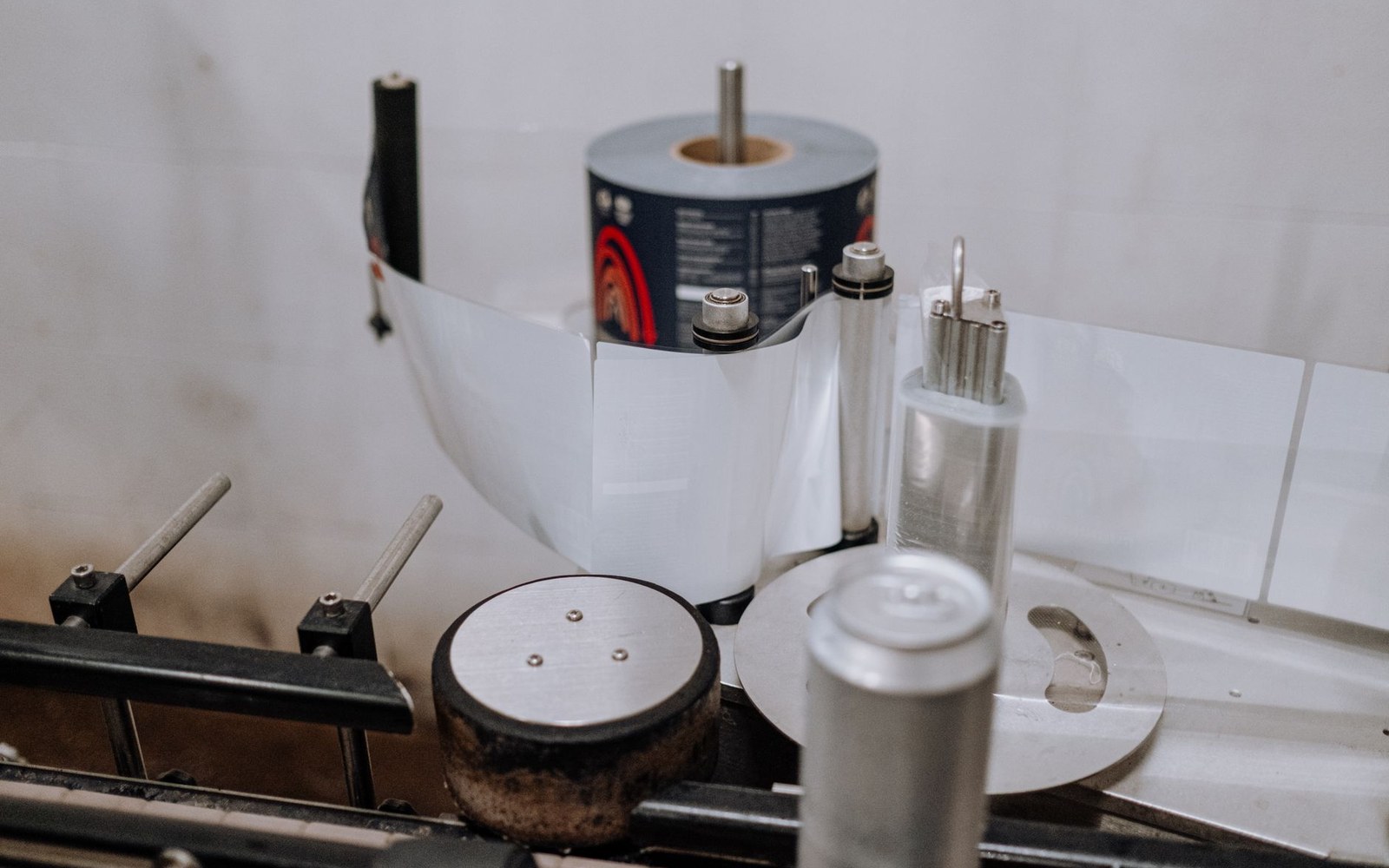
Batch monitoring is where the cost of a slower, colder fermentation shows up as tank time.
Photo: Freek Wolsink / PexelsThe result was the world's first pale lager, a style that within a generation had replicated itself across the Austro-Hungarian Empire, then Germany, then everywhere refrigeration allowed. The brewery trademarked the name Pilsner Urquell — "original source pilsner" in a German-Czech hybrid — in 1898, a legal move that acknowledged how thoroughly the style had already been copied.
Ownership, Scale and the 1842 Record
The Plzeň brewery's twentieth century was turbulent in the way all Czech industry was turbulent: nationalization in 1945, state operation for four decades, then privatization in 1994 and sale to SABMiller in 1999. When AB InBev acquired SABMiller in 2016, regulators required divestiture of the Central European portfolio, and Asahi bought Pilsner Urquell, along with Kozel and Tyskie, for roughly €7.3 billion. The Plzeň brewery remains the production site, and Asahi has maintained the open-flame decoction mashing process that distinguishes Urquell's production from most industrial lager.
Chronology
- 1838Plzeň city council pours out thirty-six barrels of substandard beer
- 1842Měšťanský pivovar brews the first batch of pale lager on 5 October; publicly sold that November
- 1898"Pilsner Urquell" trademarked as the original-source designation
- 1945Brewery nationalized under postwar Czechoslovak reorganization
- 1994Privatized following the post-communist transition
- 1999Acquired by SABMiller
- 2016SABMiller acquired by AB InBev; Pilsner Urquell portfolio sold to Asahi for approximately €7.3 billion
What the 1842 recipe specified can be reconstructed with some confidence from surviving brewery records: a grain bill of Moravian barley malt, a single hop variety (Žatec), and a process involving triple decoction — portions of the mash boiled separately and returned to raise the temperature in stages. The resulting beer was probably around 4.4% ABV by modern calculation, pale straw in colour (modern Urquell's brightness owes something to more refined malting), and noticeably bitter by lager standards then and now.
Czech consumption-per-head figures situate how thoroughly the style colonised its birthplace. According to the Brewers Association of the Czech Republic, Czech adults regularly lead global per-capita consumption surveys — figures consistently published above 180 litres per person annually — with pale lager accounting for the overwhelming majority of domestic volume.
The style the rest of the world calls "pilsner" or simply "lager" diverged from Groll's original within decades. German interpretations were harder and more bitter; American adjunct lagers, which now account for the largest single slice of global beer volume, took the pale-and-clear aesthetic and stretched it toward lower bitterness and lighter body. The Plzeň original sits today as a registered brand owned by a Japanese conglomerate, still brewed on its founding site, still triple-decocted. The template generated an industry; the brewery that generated the template is now a heritage asset inside one of the world's largest beverage companies.