Where It Came From
Three Founding Moments, Fifteen Years Apart
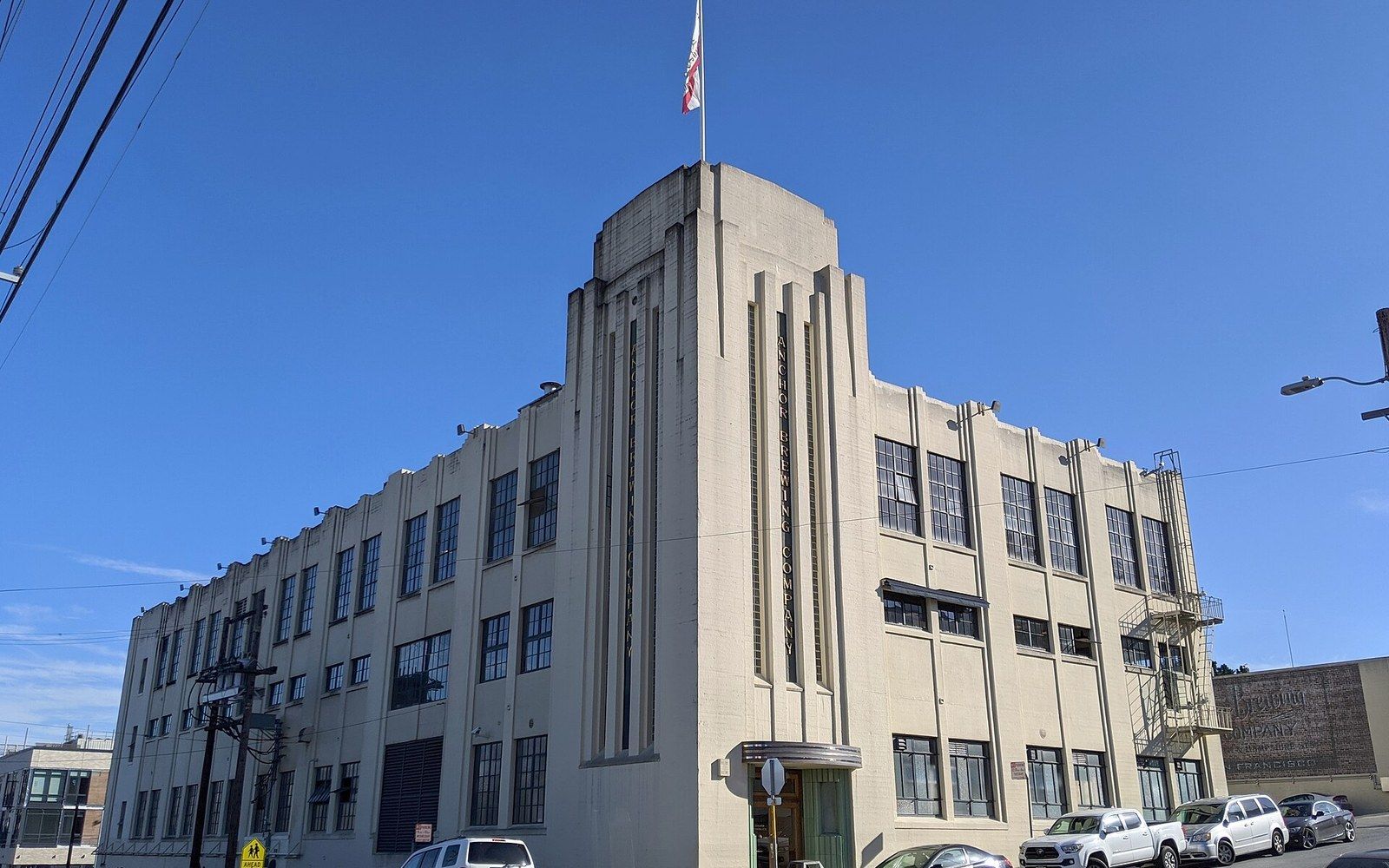
Photo: Anchor Brewing Company building, San Francisco (2020) · Wikimedia Commons
The circumstances that created CAMRA, Anchor and Sierra Nevada are almost as important as the organisations themselves
When the Mainstream Became the Problem
In 1965, Fritz Maytag paid a reported fifty-one percent of Anchor Brewing's stock for a few thousand dollars — just enough to stop the San Francisco brewery from closing that summer. What he bought was a collapsing operation: the equipment was decrepit, the beer was inconsistent, and the American lager market it was fighting had no interest in saving either. Maytag spent the next decade rebuilding the brewery from process upward, installing temperature-controlled fermentation, restoring Anchor Steam Beer to a reliable standard and — by 1972 — turning a profit. The brewery is now widely cited by the Brewers Association as the foundational commercial model for American craft brewing: a small, independent operation defined by quality and specificity rather than volume and uniformity.
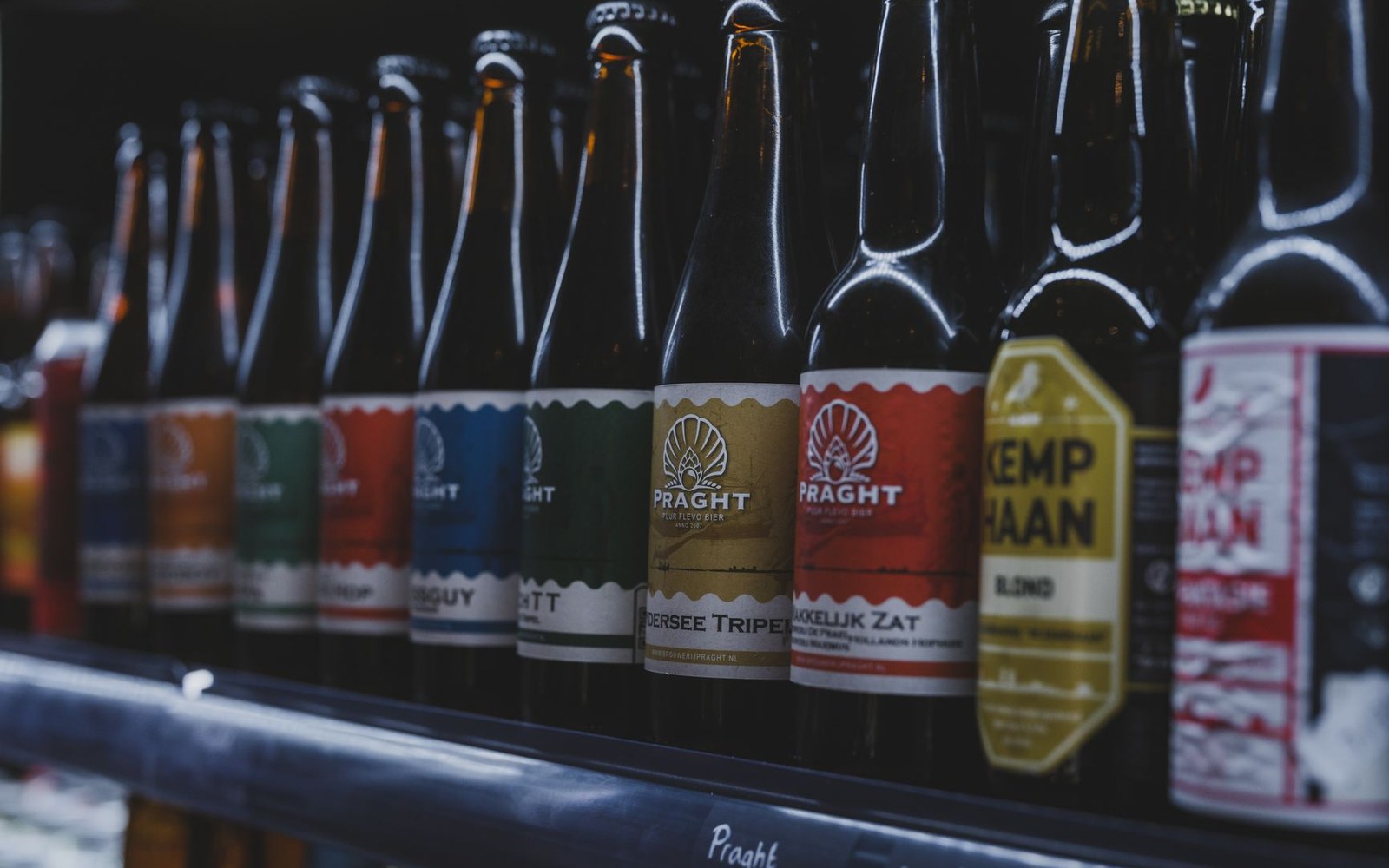
Shelf space is finite and re-set seasonally, which is why a category that stops growing loses facings quickly.
Photo: Haberdoedas Photography / PexelsSix years after Maytag's purchase, and four thousand miles east, four men met in the National Union of Journalists' club in London and decided to start a campaign. The Campaign for Real Ale — CAMRA — was formally constituted in March 1971 in response to conditions structurally identical to those Maytag had encountered: consolidation compressing choice. Britain's regional brewers were being absorbed by national groups at speed, and cask-conditioned ale was losing pub taps to keg products that the large brewers preferred — longer shelf-life, easier to transport, easier to brand. CAMRA named and codified "real ale" as a category worth defending, built a membership organisation to defend it and, in doing so, created the first consumer movement in the world organised specifically around beer quality.
The third moment arrived in 1980, when Ken Grossman opened Sierra Nevada Brewing Company in Chico, California, partly using equipment sourced from the dairy industry. The brewery's early infrastructure was handbuilt and improvised; its first commercial beer, Sierra Nevada Pale Ale, was a commercial and stylistic statement — assertively hopped with Cascade hops in an era when American palates had been trained by adjunct-lightened lagers to expect almost no bitterness at all. Sierra Nevada Pale Ale has since become one of the longest-running and highest-volume craft brands in the United States, and the Chico brewery itself grew into one of the country's largest craft operations without changing ownership.
Chronology
- 1965Fritz Maytag acquires controlling stake in Anchor Brewing, San Francisco
- 1971CAMRA founded in London; "real ale" named as a category
- 1980Sierra Nevada Brewing Company opens in Chico, California
- 2017Anchor sold to Sapporo Holdings
- 2023Anchor Brewing closed by Sapporo
What the Three Moments Have in Common
Set against each other, the three founding conditions reveal a consistent structure: an incumbent market pushing toward homogeneity, and a small actor choosing specificity instead. Maytag's San Francisco, CAMRA's Britain and Grossman's California each faced a version of the same problem — consolidation making variety harder to find and lower-quality standardised product easier to sell. Each response was different in form. Maytag's was commercial; CAMRA's was organisational and political; Grossman's was entrepreneurial with a clear stylistic thesis. But each created infrastructure the next wave of brewers or advocates could use.
CAMRA became a template for consumer beer advocacy globally, eventually growing to more than 200,000 members and publishing the Good Beer Guide annually. Sierra Nevada reached roughly a million barrels of annual production capacity across its Chico and Mills River, North Carolina facilities — significant enough to sit near the top of any independent craft volume ranking. Anchor, the earliest of the three, was eventually sold to Sapporo Holdings in 2017 and closed by its new owner in 2023, a trajectory that itself became a data point in the consolidation story those three moments originally pushed back against.
The twenty-five-year arc from Maytag's stock purchase to Sierra Nevada's first decade in operation maps almost exactly onto the conditions the Brewers Association would later count and categorise: a handful of survivors from a pre-consolidation era, a consumer campaign to define quality, and then a generation of founders who built the commercial infrastructure for a movement.